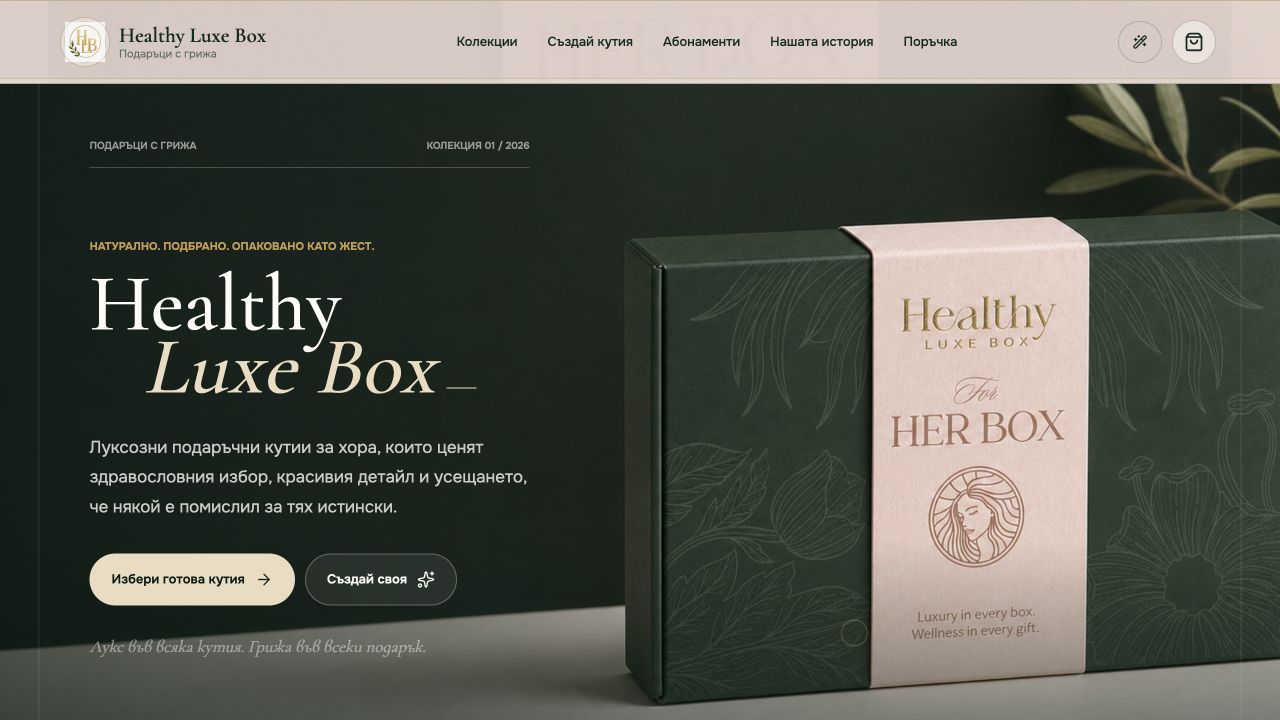
The brief: ready-made gifts and personal choices
A finished gift set is easy to browse: open a collection, compare its variants and choose a product. A personal gift needs a different path. The customer must be able to select individual items and quantities without losing track of what is included.
Healthy Luxe Box brings those paths together in a custom WordPress implementation. WordPress manages the catalogue, while the theme and custom functionality handle the box builder and enquiries. Explore the live client website in Bulgarian.
One catalogue supplies the product information
Product names, images, contents, prices and availability come from the WordPress catalogue. A change belongs to the product record rather than a separate price typed into every page. Collection pages and the builder use that source when presenting a choice.
The packaging also matters. Some selections are gift boxes; the newer “Сладка прегръдка” and “Винен ритуал” sets are presented in gift bags. The interface needs to describe the actual product, including its packaging, rather than treating every item as the same kind of box.
The custom box keeps its selected ingredients
In the personal selection path, the visitor chooses products and quantities. The displayed amount follows those choices, and the cart retains the ingredients of the selection. That gives the team something useful to review: the selected items, not just a generic “custom box” label.
When a saved selection is reopened, it is checked against the current catalogue. Availability is checked again on the server before a request is accepted. This matters when a product has changed or is no longer offered: an old browser selection must not silently become the final order.
Collection pages start with the occasion
The site has separate pages for Christmas gifts, corporate gift boxes and Her Box variants. A visitor can begin with the occasion and compare the relevant options without first browsing every collection.
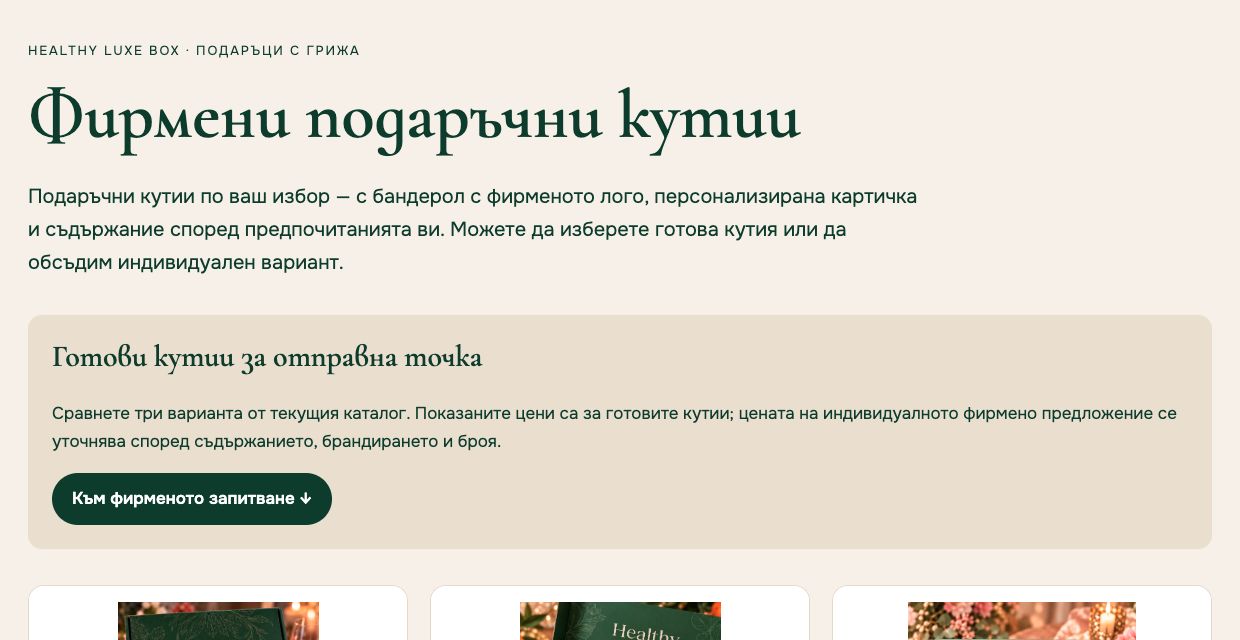
A corporate enquiry carries the selected product
The corporate page shows three existing products as starting points. Choosing one carries that product into the enquiry on the same page. The visitor then adds the quantity, an optional budget per box or total budget, a desired date, delivery city and whether a company logo is required.
There is a preview before sending. The team can then discuss the contents, branding, availability and delivery. The displayed ready-made product price is not presented as the final price of a branded series, and a quotation request does not reserve stock or charge the customer.
Requests, payments and the verified scope
The original request flow records the selection with a reference number for the team to review and confirm. The saved request and its email notification have separate states, so a saved record can be investigated independently of inbox delivery.
Card checkout for eligible ready-made sets with Econt delivery was enabled separately on 26 October. A completed bank transaction is not part of this case study’s verified results. The implementation described here covers the catalogue, personal selection and corporate enquiry paths; it does not claim a measured increase in orders, revenue or search traffic.
What to settle before building a similar shop
- Which products are ready-made, and which combinations can customers build?
- Who maintains names, photos, contents, prices and availability?
- Does the next step confirm a purchase or ask the team for a proposal?
- How should unavailable products, changed selections and delivery options be handled?
Those decisions define the work more clearly than a list of page names. For a service website with a different selection process, see the KARA RT car rental website case study. The Bulgarian version of this case study describes the same project.